
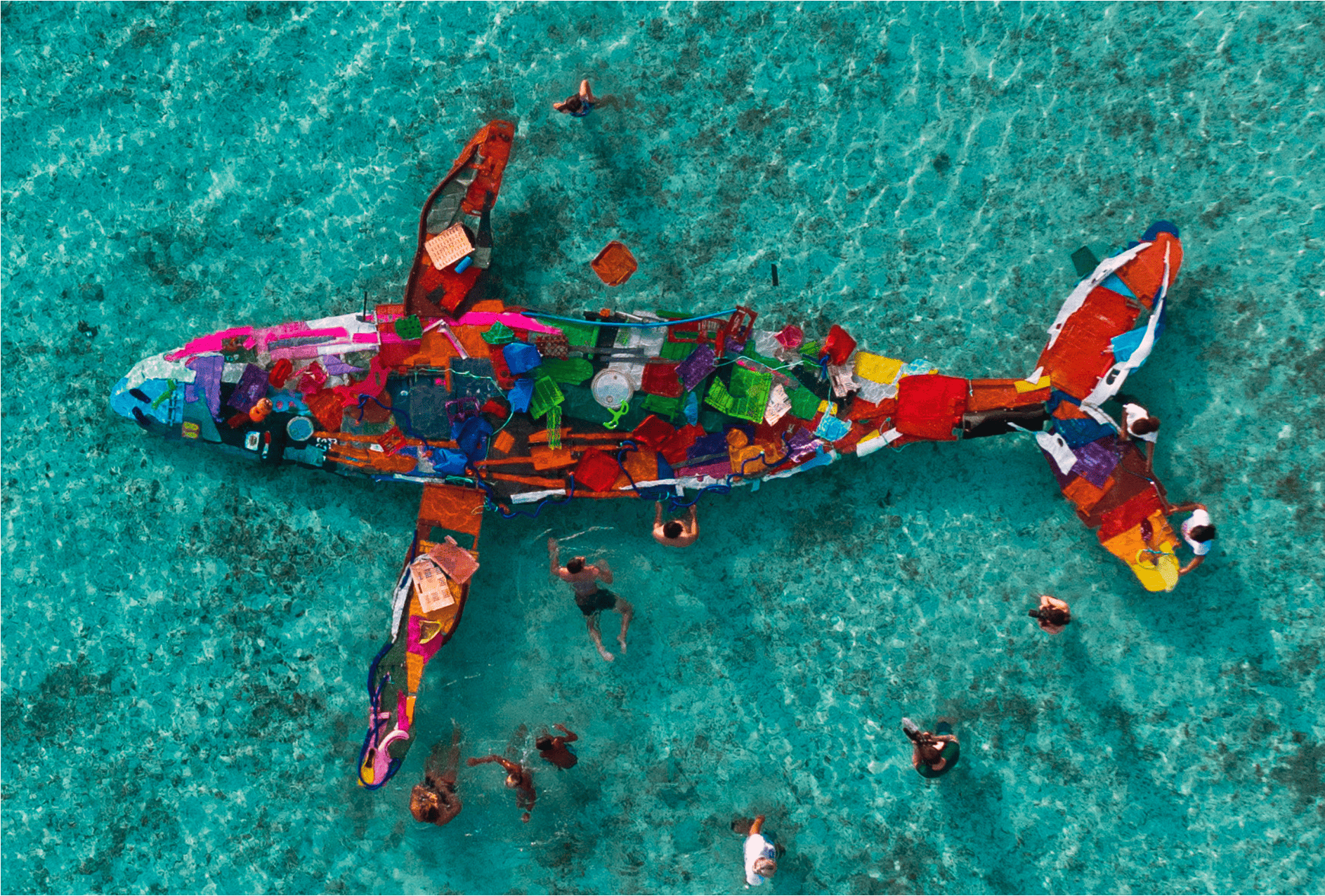
If you’ve ever walked through Lisbon and spotted a giant raccoon made from old tyres, a colourful frog emerging from a wall or an enormous animal sculpture built from discarded objects, chances are you’ve come across the work of Bordalo II. One of Portugal’s most famous street artists, he has developed a distinctive style that combines urban art, sculpture and environmental activism.
His creations transform materials that would otherwise end up in landfill into impressive representations of wildlife. But there is more to his work than eye-catching sculptures. Behind every animal is a message about consumerism, waste and the environmental consequences of modern society. So, who is Bordalo II, what makes his artwork so distinctive, and where can you find some of his most famous creations?

Who is Bordalo II?
Bordalo II is the artistic name of Artur Bordalo, a Portuguese artist born in Lisbon in 1987. He chose the name as a tribute to his grandfather, Real Bordalo, a painter who played an important role in his artistic upbringing.
Growing up, Artur was exposed to two different artistic worlds. On one hand, he spent time watching his grandfather paint. On the other, he became involved in Lisbon’s graffiti scene, experimenting with street art and developing an interest in public spaces as a platform for artistic expression.
He later attended the Faculty of Fine Arts of Lisbon, where he explored different disciplines and materials. Although painting initially attracted him, he gradually became more interested in sculpture and experimenting with unconventional objects.
Since 2012, Bordalo II has been creating large-scale installations using discarded materials, turning everyday rubbish into striking works of art. His creations can now be found in several countries, including Portugal, Spain, France, Germany, the United States and Singapore.

What is the meaning behind Bordalo II’s art?
The central theme of Bordalo II’s work is the relationship between human consumption and environmental destruction.
We live in a society that constantly produces and purchases new things, generating enormous amounts of waste in the process. Plastic, electronic components, tyres and other discarded materials often end up polluting natural environments and threatening wildlife.
Bordalo II uses these very materials to represent the animals affected by human activity. By creating wildlife sculptures out of rubbish, he encourages viewers to question their consumption habits and reconsider what we throw away.
There is also an interesting contrast in his artistic approach. At first glance, his sculptures look like realistic representations of animals. However, when you get closer, you begin to recognise the objects used to construct them.
This contrast is particularly noticeable in his Plastic Trash Animals series, where the materials are deliberately left exposed. Rather than hiding the rubbish, the artist makes it an essential part of the visual message.
What are Bordalo II’s Big Trash Animals?
One of his most famous projects is Big Trash Animals, a series of large-scale animal sculptures made from discarded objects and industrial waste.
These installations typically depict animals such as raccoons, foxes, owls, frogs, rabbits and birds. Each sculpture is assembled using different materials, including old tyres, car parts, plastic containers, electronic equipment and other unwanted objects.
The project explores the contrast between nature and pollution, showing how the waste generated by humans can directly threaten the animals represented in the artwork.
Within the series, Bordalo II experiments with different techniques. Some sculptures camouflage the discarded materials beneath layers of paint and textures, creating an almost realistic appearance. Others deliberately expose the plastic and rubbish, making the recycled components the main visual feature.
The result is artwork that is both visually impressive and environmentally provocative. The animals are not simply decorative additions to urban spaces; they are reminders of the environmental problems we often overlook.

Where can you see Bordalo II’s art in Barcelona?
If you’re visiting Barcelona and want to discover Bordalo II’s work, there’s another place worth adding to your itinerary: Barcelona Art Street Museum (BAS), located in the heart of the Gothic Quarter.
Unlike Lisbon, where many of his creations can be found in public spaces, Barcelona offers the opportunity to discover his work in a dedicated urban art museum.
Bordalo II is part of the permanent collection at Barcelona Art Street Museum, alongside an impressive selection of internationally recognised urban artists. His work is featured in the museum’s Matter, Memory and Territory room, a space dedicated to artists who experiment with materials, recycled elements and unconventional creative processes.
It’s particularly interesting to see his work in this setting because visitors can appreciate the artistic techniques and materials behind his creations while learning more about the ideas that inspire them.
BAS Museum brings together more than 35 original artworks across seven themed rooms, featuring both local and international artists. The collection also includes names such as Okuda San Miguel, Aryz, Felipe Pantone, PichiAvo, and Escif.
If you’re interested in Bordalo II street art, BAS is a great opportunity to explore his artistic universe while discovering other influential figures in contemporary urban art.
You’ll find the museum at Carrer de la Carabassa 10, 08002 Barcelona, in the Gothic Quarter. The museum is open from Tuesday to Sunday, from 11:00 to 20:30, and a visit takes approximately 40 minutes.

Where can you see Bordalo II street art in Lisbon?
Lisbon is one of the best cities to explore his work. As his hometown and artistic base, it has become home to several of his most recognisable installations.
If you’re interested in Bordalo II’s street art, Lisbon has plenty to offer. Although it’s worth remembering that street art is constantly evolving. Some installations may be relocated, removed or replaced over time.
Here are some notable works and locations to look out for:
1. Big Raccoon – Chelas
One of his most recognisable creations is the giant raccoon originally installed in Belém in 2015. Made from discarded materials, the sculpture became one of the artist’s most photographed works.
However, following plans to demolish the building where it was installed, the original artwork was relocated and reconstructed in Chelas in 2025 under the name Re-Raccoon.
It’s a particularly interesting example of how Bordalo II’s work can evolve beyond its original location, giving an existing sculpture a second life.

2. Half Fox – Avinguda 24 de Julho
Another interesting example of Bordalo II street art can be found around Avenida 24 de Julho, in the Santos area.
The Half Fox was created using discarded materials to represent one side of the animal, while the other side contrasts with the surrounding wall. The sculpture is a good example of the artist’s approach to combining realistic animal forms with industrial waste.
As with other older installations, check its current condition and accessibility before planning your visit.

3. Half Panda – Rua de São Tomé
Located in the historic neighbourhood of Alfama, Half Panda is another notable creation from the artist’s EVILUTION exhibition.
The panda is particularly interesting because it brings his environmental message into one of Lisbon’s most traditional neighbourhoods.
Its location also makes it a good addition to a walking tour through the city’s historic streets.

Monkey Bordalo II: why does he use animals in his artwork?
Animals are central to Bordalo II’s artistic identity. Rather than choosing them randomly, he often represents species that are vulnerable to environmental destruction.
One example is his interest in primates. His work includes different monkey sculptures, such as Half Chimp, originally created in Lisbon in 2017, and Plastic Mom and Baby Monkey, installed in Miami in 2021.
These pieces demonstrate how the artist uses familiar animal figures to make environmental issues more relatable.
The monkey Bordalo II sculptures are particularly interesting because they highlight the contrast between living creatures and the waste produced by human activity.
His animal sculptures also extend beyond the Big Trash Animals series. Other projects explore materials such as reclaimed wood and stone, demonstrating his willingness to experiment with different artistic techniques.

Bordalo II’s aim
Bordalo II is a great example of how street art can go beyond traditional graffiti and become a powerful form of social commentary.
His ability to transform discarded objects into impressive sculptures challenges the way we think about waste, consumption and the natural world. His work reminds us that even the things we throw away can have a second life, sometimes in the form of something extraordinary.